
Journal Entry for Amortization with Examples & More
These are very interesting questions and I suggest you connect with your accountant to get the most accurate answers for your business needs. With QuickBooks Online, you can give your accountant access to your account in a few easy steps. To do so, check this community article on how to manage an accountant user in QuickBooks Online.
trademarks of Intuit Inc. Terms and conditions, features, support,
This is because the cost of an intangible asset is spread over the years, and such periodic charges reduce its value over time. Goodwill is typically created when one business acquires another business, and in the process, the acquiring business pays more than the book value of the acquired business. Suppose Company XYZ, a technology firm, acquires a patent for $100,000 to protect its innovative software technology. The patent has a useful life of 10 years and no residual value, meaning it will be fully amortized over the 10-year period. Company XYZ chooses to use the straight-line method to amortize the patent’s cost evenly over its useful life.
Companies can use the schedules to determine the value they should record. However, they can also calculate the value based on the agreement made with the related financial institution. For example, on which journal entry records the amortization of an expense January 02, 2020, the company ABC Ltd. bought a license that costs $10,000. I am transferring to online from a very old version of QB and need to enter all my opening balances for the categories I had in that system. Ie Computer Equipment with sub categories of Cost and Accumulated depreciation. The numbers end up opposite of what they are in my old system and I am not sure why.
What is Amortization Expense?
For companies to record amortization expenses, it is necessary to have some specific amounts. Firstly, companies must have the asset’s cost or its carrying value recognized based on the related standards. Journal entries are an essential part of accounting, as they help record the financial transactions of a business accurately. When it comes to amortization expense, there are specific journal entries that need to be made.
- Companies can use the schedules to determine the value they should record.
- By recording these expenses accurately through journal entries, companies can reflect the ongoing consumption or expiration of their intangible assets.
- Suppose Company XYZ, a technology firm, acquires a patent for $100,000 to protect its innovative software technology.
- Assets are resources owned or controlled by a company or business that bring future economic inflows.
Example with Accumulated Amortization Account
Amortization expense is the income statement item that represents the allocated cost of the intangible asset for the period. XYZ Ltd purchased a patent for 50,000 which is expected to expire after five years. By now, you should be able to predict what the journal entry for amortization will look like. To record the amortization expense, ABC Co. uses the following double entry. As stated above, most financial institutions provide companies with loan repayment schedules with the breakup of periodic payments split into principal and interest payments. Recording your transactions the right way is a good exercise for keeping your books accurate.
If so, you would /should have Debited the Asset account, and Credited the Bank account. Amortization is recorded by setting up a sub or contra-account under your Main asset called Accumulated Amortization. Unlike depreciation (which refers to tangible assets), amortization deals with the systematic reduction of an asset’s value on financial statements. Think of it as spreading out the cost of an asset over its useful life rather than expensing it all at once. Such a lawsuit establishes the validity of the patent and thereby increases its service potential. In addition, the firm debits the cost of any competing patents purchased to ensure the revenue-generating capability of its own patent to the Patents account.
You can easily invite an accountant to your books or find one in your area. Just head to the My Accountant menu to get started, then select Find a pro to help. When purchasing a patent, a company records it in the Patents account at cost. In this case, amortization means dividing the loan amount into payments until it is paid off. You record each payment as an expense, not the entire cost of the loan at once.
Usually, this process involves using an amortization schedule to record principal and interest payments. However, the accounting treatments for both differ due to the underlying accounts involved. Once companies determine the principal and interest payment values, they can use the following journal entry to record amortization expenses for loans. For intangible assets, companies use the asset’s useful life to divide its cost over time, while for loans, they use to number of periods for payments. Amortization is a technique used in accounting to spread the cost of an intangible asset or a loan over a period.
This exclusive right enables the owner to manufacture, sell, lease, or otherwise benefit from an invention for a limited period. Working Note – The difference of 20,000 will be treated as Goodwill of the business and written off annually for the next 10 years.
This annual expense will decrease the value of the intangible asset as well as overall income each year it is applied. Because they are reporting it in the annual report, we can assume they are using separate GL accounts for the accumulated amortization. On the other hand, the accumulated amortization results in a decrease in the intangible asset value in the Balance Sheet. Similar to the depreciation, in the amortization expense journal entry, total expenses in the income statement will increase while total assets in the balance sheet decrease. Likewise, the net book value of the intangible asset will become zero when the cost of the intangible asset equal to its accumulated amortization.
To record the amortization expense, debit the amortization expense account and credit the accumulated amortization account. It’s important to note that different intangible assets have different methods of calculating their amortization expenses. Some assets might use straight-line depreciation while others use accelerated or unit-of-production methods.
I’ll also leave this question here so other accounting professional members can chime in and share their expert advice. I get the expense reducing the asset and going into accum amort – so the asset is hit twice and no expense to the p&L. Amortization means spreading the cost of an intangible asset over its useful life. My recommendation would be to not use the opening balance in the account set-up in QBO. There are some account types where if you follow QBO’s directions, you will end up with balances on the wrong side of the equation. This has been brought to their attention – not sure if or when it will be fixed.
However, amortization does not apply to all loans, for example, credit cards or balloon loans. Ensure that amortization expense is accurately recorded by reviewing the intangible asset’s useful life and estimated salvage value. This entry reduces the value of the intangible asset on the balance sheet by 2,000 and recognizes the expense on the profit & loss account.
Depreciation is used for tangible assets with a physical presence, such as buildings, machinery, and vehicles, while amortization is employed for intangible assets. The journal entry for amortization expense involves debiting the Amortization Expense account and crediting either an Accumulated Amortization or a Contra-Asset account. This allows for proper tracking and gradual reduction of the asset’s value over time. In accounting, amortization is the allocation of the cost of the intangible asset over the periods that the company receives the benefits from the asset. Likewise, the company needs to make the journal entry for the amortization expense in each period that it allocates the cost.
What Is Progress Billing and How Does It Work in Projects?

These terms specify the percentage to be withheld, the conditions for release, and the timeline for payment. It’s crucial for both parties to clearly understand these stipulations to avoid disputes and ensure smooth project execution. For instance, some contracts may release retainage in phases, correlating with the completion of specific milestones, while others may hold the entire amount until the final project sign-off. Retainage payable is a critical aspect of financial management in the construction industry. It involves withholding a portion of payment to contractors or subcontractors until project completion, ensuring that all work meets specified standards and contractual obligations. For example, let’s say you’re working on a construction project where the contract stipulates 10% retainage payable.
Construction Punch Lists Explained
In this scenario, ACME is going to be in the red on this project to the tune of -3% until they finally receive their retainage withheld. Subcontractors and other down-the-chain participants have gripes about retainage – with good income statement reason. Retainage practices are problematic because they cause practical issues and business relationship issues within the already-complicated accounting and payment systems of the construction world. Proper recording and tracking starts with adding the right fields to your Chart of Accounts. Given how important your CoA is in ensuring accurate accounting, including an account for retainage receivables is essential.
Assessing AP Risk: A Guide to Accounts Payable Risk Assessment
- In most states, retention is mandated on certain projects by state law.
- One common question that many folks in the construction industry have is whether the Texas retainage rules apply to residential…
- Since some accounting software packages, like Quickbooks, don’t track retention on either the receivable or payable side, companies either don’t track it or use other tools, like Excel, to track these amounts.
- Drafting a detailed Scope of Work (SOW) document, incorporated into the contract, minimizes disputes and provides a reference for any changes or amendments.
- Just like with federal projects, retainage can be withheld on state, municipal, and county projects.
- Still, you are assured of saving some money to offset any loss and inconvenience brought about by any incomplete work.
You can stay in contact with the client and find out his experience of the new facility. Do not leave the task of getting paid to the project manager or debt collector. Having done all that you were expected to do and probably even exceeded your client’s expectations, do not cut off communication. You can easily get overwhelmed by all the work involved in closing out projects.
Construction Loan Draws Explained
When you are ready to bill for retention, you can use the Account QuickReport for the Retainage Receivable account. This is because, under most construction contracts, you won’t be able to collect it yet. When you submit an invoice or pay application, you subtract retainage from the total currently due. At the end of the project, or whenever it becomes due under your contract, you will bill for retainage in its own invoice.


As a project owner, a retainage fee will protect you from liens, claims and contractor defaults. QuickBooks includes a standard Chart of Accounts that works for many small retail businesses, which includes an Accounts Receivable (A/R) account. Contractors need to take some additional steps to set up a QB account to record and track retainage payments. When you’re entering into a contract for a project where there will be money withheld, make sure you examine the terms to find out everything you possibly can about how the retainage will work. While this does not address the retainage problem head-on, it what is retainage in accounting does minimize the problem significantly since the completion of the project will also trigger the retainage payment. On the one hand, owners and others are allowed to withhold money from a contractor until the very end of the project.
- It can help you adapt in tough economic times, cover unexpected expenses, or take advantage of new opportunities without scrambling for additional funding.
- After project completion (or substantial completion, depending on the agreement), the contractor must be paid the retained funds within a certain timeframe.
- By tracking the amounts owed for retention, companies can make plans on how to collect overdue payments based on the amount of risk involved.
- When ABC completes the project, they will invoice the customer for $10,000 in retention.
- Crafting a strong, concise mission statement, can help construction companies sharpen their focus,…
When ABC HVAC Bookkeeping completes the project, they will invoice the customer for $10,000 in retention. This invoice is recorded in the chart of accounts as a credit of $10,000 to retention receivable and a debit of $10,000 to accounts receivable. Retention can be withheld on residential or commercial projects and on both public and private projects. The project owner usually holds retention from the general contractor’s payments, and the GC in turn holds it on their subcontractors. Retention, also called retainage, is money held back from each payment to ensure that a contractor or subcontractor completes a project.
How to Journalize Paying a Bill in Accounting
She has written content for online publication since 2007, with earlier works focusing more in education, craft/hobby, parenting, pets, and cooking. Now she focuses on careers, personal financial matters, small business concerns, accounting and taxation. This experience has given her a great deal of insight to pull from when writing about business topics. Since liabilities increase on the credit side (right) and decrease on the debit side (left), we’re going to debit this. J) George Burnham pays the amount paid telephone bill journal entry owing to the telephone company on the 13th of May.
Telephone bills received but not paid journal entries will be nothing but the accrual of expenses. It’s common across all industries to record the monthly accrual of telephone expenses. So, the Entry will be debiting the telephone bill with corresponding Credit to the telephone payable liability GL. If the company does not receive the bill at the month-end, they have to estimate the telephone expense and make recordings. Telephone charges are in the nature of expenses and fall under the Nominal Account category of the Golden rules of accounting.
Understanding the Accounts Payable Function
This leads to a need for double-entry accounting where each transaction has at least one credit and one debit in the books. To journalize paying a bill in accounting, you must understand how the transaction affects the different accounts in your organization. To journalize paying a bill, you must have already entered the bill into your accounting records. You will do this with the accounts payable account, which represents amounts your business owes to other parties from normal business operations.
The easiest part of this transaction to work out is the cash component. The timeline below shows the total amount of salaries expense for the week ended Friday, 4 January 2018. It also indicates how much expense should be allocated between the two years. Therefore, on 1 October 2019, the interest expense is $200, or 8%, of $10,000 for 3 months. Laura Chapman holds a Bachelor of Science in accounting and has worked in accounting, bookkeeping and taxation positions since 2012.
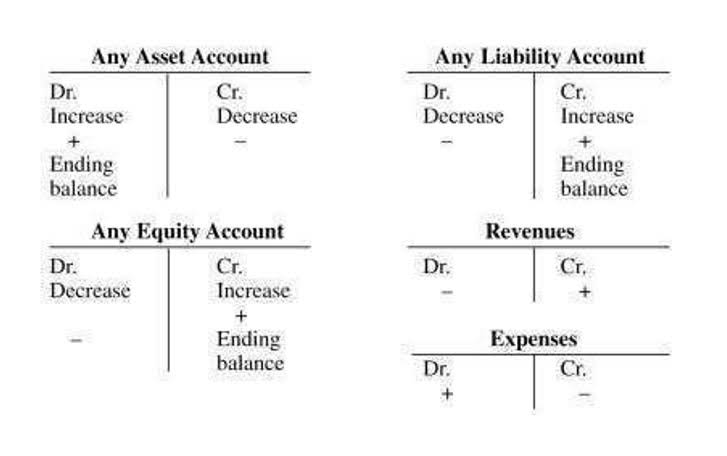
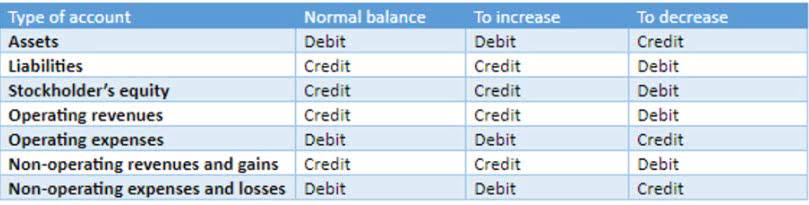
In double-entry accounting, accounts are kept in a balance where debits always equal credits. Since revenue increases equity, its normal balance is also a credit while expenses are debits. Most businesses record expenses in their books of accounts only when they are paid. When ABC receives telephone invoices, they have to record telephone expenses and accounts payable. The journal entry is debiting telephone expense $ 500 and credit accounts payable $ 500.
You may have received an invoice or bill from acquiring an asset or from incurring an expense, for example. If the company receives the invoice during the month, they have to include the expense in the current month. The expenses of a business should be recognized when they incur and not when cash is paid. The expenses are classified into direct expenses, indirect expenses, operating expenses, non-operating expenses, and more. So, those expenses will be on the debit side of the journal entry because it falls under Nominal Account.
Accounts Payable Journal Entries
The interest is based on the previous outstanding principal balance of the note. At the beginning of the new period, the company has to reverse this transaction and wait for the actual invoice from the supplier. All such information is provided solely for convenience purposes only and all users thereof should be guided accordingly.
Questions Relating to This Lesson
Now, we got a concrete understanding of the nature of this account balance. A company records an increase in this liability each period as the amount of accrued interest increases. Even though the December bill has not been recorded in the books, the fact is that the service has been received, and hence expenses incurred.
- The journal entry is debiting telephone expense and credit accrued payable.
- You’d record the bill when you received it as an account payable, even though the final date for payment not fall due for another 15, 30 or 60 days.
- In double-entry accounting, accounts are kept in a balance where debits always equal credits.
For simplicity’s sake, also assume that the firm began operations on Monday 2 January 2017. The first payday of the year was Friday 6 January 2017 and the weekly salaries total $1,500. For example, suppose that a firm pays its salaries every Friday for the workweek ending on that day. Before you start, I would recommend to time yourself to make sure that you not only get the questions right but are completing them at the right speed.
Received And Paid Bill For Telephone Service Journal Entry
11 Financial is a registered investment adviser located in Lufkin, Texas. Otherwise, if you’re happy with this lesson, then move on to the next lesson on the journal entry for repaying a loan. The purpose of Adjusting Entries to accrue an expense is to recognize an expense as it occurs. The sum of all such adjustments for a period represent the total amount of expenses accrued by a company. The bill for December had not been received by 31 December 2019 when the ledger was balanced and a trial balance extracted.
Once the bill has been paid in full, the accounts payable will be decreased with a debit entry. When the company makes the payment, they have to reverse the accounts payable and cash out. Telephone bill is a statement sent by a service provider to a customer that lists the charges for the services used. In accrual accounting, revenues are matched to the expenses used to generate them, and are recorded when incurred regardless of when cash is exchanged. When the bill or invoice is paid, it will affect accounts payable and cash. Because you are reducing the liability of accounts payable, it is the debit side of the transaction.
When ABC make payment to supplier, they will reduce cash and accounts payable. The journal entry is debiting accounts payable $ 500 and credit cash $ 500. An adjusting entry for accrued salaries expenses is made to recognize the wages earned by employees but not yet paid. For this purpose, a credit to salaries payable and a debit to salaries expenses are necessary. So, the telephone bill is debited, and the bank account will be credited. The journal entry is debiting telephone expense and credit accounts payable.
In the example below, assume we issue payments for both of the bills in our previous journal entries. Accounting is journaling the business transaction to determine a period’s profit or loss. Here’s one example of preparing a journal entry for your payroll expenses. Here are some examples showing the journal entries for some of the more common expenses. At Finance Strategists, we partner with financial experts to ensure the accuracy of our financial content.
Bills payable are accounted for in the accounts payable account as a credit entry. Bills payable are business documents that show the amount owing for goods paid telephone bill journal entry and services sold on credit. Bills payable can include service invoices, phone bills and utility bills. Small businesses that track their financial accounting using the accrual method have to carefully record their business debts.
FICA Tax: What is FICA Tax, Rates, Exemptions and Calculations
The articles and research support materials accounting principles available on this site are educational and are not intended to be investment or tax advice. All such information is provided solely for convenience purposes only and all users thereof should be guided accordingly. The Social Security tax is designed to fund the Social Security program, which provides financial support to retirees, disabled individuals, and their dependents. The additional Medicare tax should not be confused with the alternative minimum tax on high incomes, which does not involve mandatory payroll withholding. To learn more, see the IRS webpage Questions and Answers for the Additional Medicare Tax.
FICA taxes are automatically withheld from an employee’s wages by the employer, based on the applicable tax rates and wage limits. As of 2024, the Social Security tax rate is 6.2% for both employees and employers, up to a wage base limit of $168,600 ($176,100 in 2025). This means that once an employee’s wages reach this limit, no additional Social Security taxes are withheld for the remainder of the year. For this federal payroll tax, the total tax rate is 12.4% of the employee’s gross wage, with you and your workers each paying 6.2%. All payroll taxes that are paid by the employer, as well as taxes withheld from employee paychecks such as employer FICA tax, are reported on Form 941 and filed quarterly. Let’s now take a look at how to calculate FICA tax owed, how to make payments, and the due dates you must adhere to, plus penalties for not paying or paying late.
Ask Any Financial Question
Is there a topic or business challenge you would like to see covered on SPARK?
Related Articles
The program plays a vital role in ensuring access to healthcare for millions of Americans. There is no limit on earnings for workers who have reach or passed their full retirement age for the entire year. The SSA also announced upward adjustments in the Social Security earnings test limit. For those who collect Social Security retirement benefits before reaching their full retirement age, benefits are reduced by $1 for every $2 they earn over the earnings limit. When the tax provisioning portion of the Social Security Act – Title VIII – was removed from the program in 1939, it was placed into the Internal Revenue Tax code. At that time, a more descriptive name than Title VIII was needed, so the tax was renamed as the Federal Insurance Contributions Act, or simply FICA.
How confident are you in your long term financial plan?
Business income in excess of $200,000 is subject to the 0.9% Medicare surtax. These numbers should look familiar because SECA taxes essentially just add up the employer and employee share of FICA taxes. The only boosts to FICA taxes recently have come from the rising wage base on which Social Security payroll taxes get imposed.
Forms Directory
It must be ensured that the total gross income of an employee for a year must not exceed the wage limit. While calculating the Medicare tax, the conditions for additional tax must be kept in mind. There is no limit on the amount of earnings subject to Medicare (hospital insurance) tax. The Medicare tax rate applies to all taxable wages and remains at 1.45 percent with the exception of an “additional Medicare tax” assessed against all taxable wages paid in excess of the applicable threshold (see Note). It’s important to take note of the wage caps and thresholds so you correctly calculate your FICA tax responsibility and withhold the right amounts from your employees. Note that the main change between the 2019 and 2020 tax year is the wage cap for the social security tax; other than that the rates are set to remain the same at least through the 2020 tax year.
- Employers withhold the required payments from their employees’ wages and also contribute their own share.
- The articles and research support materials available on this site are educational and are not intended to be investment or tax advice.
- Self-employed individuals must also report their self-employment income on Form 1040, Schedule C or Schedule F, depending on the nature of their business activities.
- Such information is by nature subject to revision and may not be the most current information available.
- Unless your FICA tax liability is less than $2,500 in a quarter, small businesses must use the IRS’s Electronic Federal Tax Payment System (EFTPS) to deposit FICA taxes.
- If your total tax liability for all four quarters is $50,000 or less, you must deposit your taxes on a monthly basis.
File
HR must always include human intelligence and oversight of AI in decision-making in hiring and firing, a legal material variance expert said at SHRM24. She added that HR can ensure compliance by meeting the strictest AI standards, which will be in Colorado’s upcoming AI law. Additionally, the SSA announced that Social Security benefits for nearly 69 million Americans will increase 1.6 percent in 2020. The cost of living adjustment is based on the annual increase in the consumer price index through the third quarter of 2019.
Below is a summary table taken from IRS Publication 15 of the penalties that you may be required to pay based on the number of days your payment is late. Note that the Social Security tax wage limit can change every year. Ensure that you check announcements from the Social Security Administration (SSA) from time to time.
- For the latest on how federal and state tax law changes may impact your business, visit the ADP Eye on Washington Web page located at /regulatorynews.
- The Social Security Administration (SSA) recently announced that the Social Security taxable wage base for 2020 will increase to $137,700 from $132,900.
- By adjusting their withholding amounts, “taxpayers can ensure that the right amount is taken out of their pay throughout the year,” the IRS advised.
- On October 10, 2019, the Social Security Administration (SSA) announced that the 2020 Social Security wage base will be $137,700, which is an increase of $4,800 from $132,900 in 2019.
- However, it’s important to note that if an employee’s earnings exceed $200,000, they are required to pay an additional 0.9 percent of tax towards Medicare.
However, they are allowed to deduct the employer part of the tax as a business expense. Moreover, quarterly earnings that are below the $400 mark filing income tax return late are exempt under SECA. FICA taxes are calculated based on an individual’s gross annual wages.
Consolidated Financial Statements Guide
The presentation and results using the stated accounting policies do not result in any significant differences from Canadian public sector accounting standards. Management is responsible for the integrity and objectivity of the information in these consolidated financial statements. Some of the information in the consolidated current ratio formula financial statements is based on management’s best estimates and judgment, and gives due consideration to materiality. To fulfill its accounting and reporting responsibilities, management maintains a set of accounts that provides a centralized record of the Department’s financial transactions.
Its important to understand the key difference between consolidated financial statements and combined financial statements, terms often used interchangeably, but that actually refer to two different types of reporting. Its important to note that private companies dont have many requirements regarding how or if they develop consolidated financial statements, but public companies must follow GAAP guidelines. Consolidating a parent company’s accounts with its subsidiaries offers a comprehensive view of financial position and performance.
Monetary assets and liabilities denominated in foreign currencies are translated into Canadian dollars using the rate of exchange in effect at March 31st. Nevertheless, these can be classified as held for sale and discontinued operations under IFRS 5, which can considerably simplify the determination of fair value and consolidation. Specifically, the acquirer would not need to measure individual assets and liabilities at fair value, as all assets and liabilities will be presented in one line (one line for assets and another for liabilities). P/L consolidation will also be presented in a single line, representing discontinued operations.
Company
The NLCA establishes that the operator’s liability for damages resulting from a nuclear incident is limited to $1 billion. This amount applies to loan journal entry the “Power Reactor Class” of nuclear installations prescribed in the Nuclear Liability and Compensation Regulations (NLCR). Lower liability amounts for lower-risk installations, based on their commensurate risk, are prescribed in the NLCR. The Minister of Natural Resources is required to review the operator’s liability limit at least once every five years, and the government may increase the limit by regulation.
The cost and equity methods are two additional ways companies may account for ownership interests in their financial reporting. Contingent liabilities, including the allowance for loan guarantees and an insurance program, are potential liabilities which may become actual liabilities when one or more future events occur or fail to occur. If the future event is likely to occur or fail to occur, and a reasonable estimate of the loss can be made, a provision is accrued and an expense is recorded to other operating expenses. If the likelihood is not determinable or an amount cannot be reasonably estimated, the contingency is disclosed in the notes to the consolidated financial statements.
However, they differ on one key point- a consolidated financial statement gives information about an organization and all of its subsidiaries in the same document. In the next section, we will see how we can format a consolidated financial statement so that the investors understand the direction of a company and its subsidiary. We will look at both International Accounting Standards applicable worldwide, except GAAP, applicable in the USA.
What is Financial Consolidation Software?
“Consolidations” is a major topic within the university course and textbook entitled Advanced Accounting. Consolidated statements of operations is a common header that appears on the income statement. Other variations of this title include consolidated statements of income or consolidated reports of operations. Luckily there are now software types that assist in the consolidation of financial statements that have value in their ability to automate and speed up these processes. Consolidation software then transforms these numerous data sets into actionable insights all with a mere click-of-a button.
Departmental system of internal control over financial management
- These statements combine the financial results of multiple entities within a group into a single set of financial statements.
- In March 2020, the World Health Organization officially declared the outbreak of COVID-19 as a global pandemic.
- Repayments are determined upon the successful commercialization of products generated by the R&D.
- Accounting departments consist of a variety of players including CFO’s, VP’s, Directors, and more, each one requiring something different from a chosen software.
- The consolidated statement of changes in equity starts with the parent company’s equity, followed by the equity of all subsidiaries.
If you werent already convinced that its time to ditch manual processes, using software to consolidate financial statements delivers additional benefits that make for more transparent, accountable, efficient and accurate financial reporting. Combined financial statements report on the finances of both your parent company and subsidiaries, but they maintain them as separate reports within a single document. Its important to note that consolidated financial statements dont replace the individual reports used by each business entity, which still need them to operate independently and make decisions. The cost method is used when the parent company holds less than 20% ownership in the subsidiary.
Protective rights
- Monetary assets and liabilities denominated in foreign currencies are translated into Canadian dollars using the rate of exchange in effect at March 31st.
- In the realm of Consolidated Financial Statements, let’s examine the hypothetical case of XYZ Corporation and its subsidiary, ABC Ltd.
- The silos that exist across manual financial reporting methods create inaccuracies and version control issues that are nearly insurmountable for multi-entity organizations to overcome.
- It is essential to consider both domestic and international subsidiaries, as well as special-purpose entities that may require consolidation based on the applicable accounting standards and regulations.
- This account is a continuation of the Nuclear Liability Reinsurance Account under the previous Nuclear Liability Act, now repealed.
- Adjustments should also be made for any unrealized gains or losses on intra-group transfers of non-monetary assets, such as land or intellectual property.
- However, there may be situations where an investor with majority voting rights lacks the practical ability to exercise them.
IFRS 10 provides a comprehensive definition of control, ensuring that no entity controlled by the reporting entity is omitted from its consolidated financial statements. This is particularly crucial when an entity’s operations are not directed through voting rights. Even if the subsidiaries are separate legal entities to the parent company, and therefore record their own financial statements, they are still included arrc issues sofr recommendations for intercompany loans in the consolidated group financial statement. It is also possible to have consolidated financial statements for a portion of a group of companies.
IFRS 10.4A specifies that IFRS 10 does not apply to post-employment benefit plans or other long-term employee benefit plans to which IAS 19 is applicable. However, the phrasing isn’t entirely clear as to whether this exemption relates to financial statements prepared by employee benefit plans or to employers who need to consider whether such plans should be consolidated. In other words, employers are not required to assess whether employee benefit plans should be treated as subsidiaries and thus need to be consolidated. Changes in a parent’s ownership interest in a subsidiary that don’t result in loss of control are treated as equity transactions. These changes don’t impact the profit or loss, recognised assets (including goodwill), or liabilities (IFRS 10.23,B96,BCZ168–BCZ179). Prior to the introduction of IFRS 10, the acquisition of a non-controlling interest often led to the parent recognising additional goodwill (prohibited under IFRS 10).
Can companies choose between consolidated and unconsolidated financial statements?
Consolidated financial statements provide the most accurate view for valuing the company as a whole. This is important for investors interested in buying or selling the organization or investing in its growth. By modernizing your financial statement consolidation processes with cloud-based solutions, you can get a better handle on the performance of each individual entity and what it means for the financial health of your entire organization. A software platform also provides much-needed shared views for the individuals and teams working together on developing your consolidated financial statements.
Choosing to Use Consolidated Financial Statements
The consolidated change in equity shows the parent company’s equity and equity of all subsidiaries. Consolidated financial statements are often challenging for readers due to their complexity. Reading and analyzing these statements requires a different approach than reading standalone statements. By understanding the purpose, audience, and contents of these statements, you can better understand them.
Professional Bookkeeping Services for Nonprofit Organizations

To help them out with their varied requirements, we have a team of consultants who offer CFO advisory and consultation services. Our team adapts to your nonprofit’s needs to provide the perfect financial management solution. We can serve as your organization’s bookkeeper, accountant, controller, or Chief Financial Officer (CFO), depending on which services you’re looking for.
- No one understands the complexity and nuance of nonprofit bookkeeping quite like the compliance professionals at Foundation Group.
- Cap Ex Advisory Group is an Owner’s Representation firm specializing in the vision, financing, and development of complex projects for notable institutions and nonprofit organizations.
- Whether you decide to outsource both your bookkeeping and accounting services or just one, you can be confident that we’ll provide professional services designed to meet your nonprofit’s specific needs.
- When it comes to tax planning and preparation, churches and foundations face unique challenges like complex reporting requirements, specialized tax laws, etc.
- Failure to file can result in penalty fees; tax-exempt revocation, and taxes may be due on the income you collected if your exemption is revoked.
Nonprofit Accounting Services:
Only one member in each metropolitan area firm is Accounting for Churches admitted to Nonprofit CPAs. We are proud to be recognized for our leading accounting and business development practices and superior service in the Tampa Bay Region. We understand that all non-profitable businesses have their own type and size.

Fully Staffed Accounting Team

You have a special heart for managing a nonprofit organization, and we have a special heart for nonprofits. Fund accounting, the accounting for nonprofits, is not like a for-profit organization’s accounting system. That’s why you’ll need special accounting software plus accounting professionals who know nonprofit accounting.
- Trust in Jitasa to provide the financial clarity and strategic foresight necessary to drive meaningful change, ensuring your nonprofit contributes significantly to Tampa’s rich tapestry of community life.
- Howard CPAs is renowned as a one-stop solution, taking care of accounts, finance, and tax requirements single-handedly.
- Moreover, we act as a premier QuickBooks consultant for non-profit organizations to make sure that they are able to make the best use of advanced technology in maintaining their accounts.
- Non-profits organizations have their specialized accounting, compliance, and consulting requirements.
- Here, we have listed a brief of our offerings for a better understanding of the users.
Resources
Thus, at any point in time, if you are searching for a bookkeeping tampa firm to handle the accounts and finances of your NPO, your search ends here. Do not look any further and come to Howard CPAs without any kind of hesitation. Contact us today, and feel free to discuss your requirements with our experienced team. Exclusive Tampa Bay Member of Nonprofit CPAs, a nationwide affiliation of independently-owned accounting firms committed to delivering exceptional financial and consulting services to nonprofit organizations.
Delivering Expert Outsourced Bookkeeping Services in Tampa Bay
We believe that we reach our highest potential when we marshal our resources to foster human flourishing. With a head for numbers and a heart for service, I’m a committed partner invested retained earnings in your mission, ensuring your finances are tracked with accuracy, reliability, and attention to detail. YPTC offers data visualization services that can help you make data-driven decisions and access the information you need to run your organization from anywhere. Our team has the expertise, including ensuring compliance with Government Auditing Standards (Yellow Book) and the Uniform Guidance, to give you peace of mind and let you focus on your mission, rather than your financials. Our accountants are fully prepared to take on the most difficult audit preparations, account reconciliations, system reviews, and more. Plus, Jitasa works exclusively with nonprofits, so our strategies are tailored to your needs.